7 SBA Rule Changes in 2025 That Will Decide Your 2026 Loan Approval
- SBA reduced maximum 7(a) Small Loan size from $500,000 to $350,000, forcing mid-range borrowers into more rigorous standard 7(a) processes.
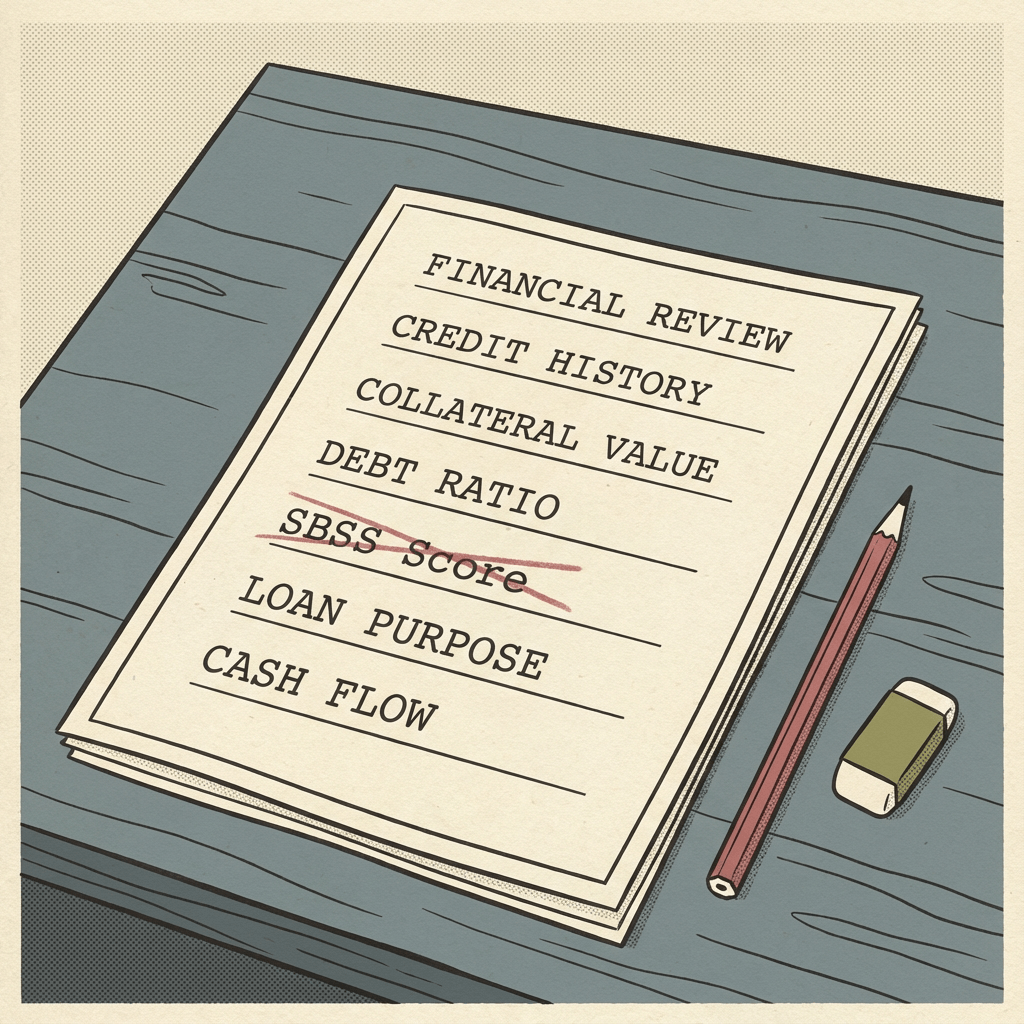
- The minimum SBSS credit score requirement increased from 155 to 165, automatically disqualifying borderline applicants before lender review.
- Merchant Cash Advance debt can no longer be refinanced with SBA loans, trapping businesses with high-interest debt and potentially disqualifying them from approval.
Updated for 2026 applications | FastwaySBA.com
The SBA doesn't hold press conferences when it rewrites eligibility rules. But for business owners planning to apply in 2026, the changes implemented throughout 2025 represent a fundamental shift in who qualifies and who gets screened out before their application ever reaches a human underwriter.
These aren't minor policy tweaks. They're hard filters. If your application fails any of these updated requirements, no amount of lender flexibility can override it. Understanding these changes now, before you apply, is the difference between approval and wasted months chasing a loan you were never going to get.
Here's what changed, why it matters, and how to position your business accordingly.
1. Maximum 7(a) Small Loan Size Reduced to $350,000
Effective: April 21, 2025
Source: SBA Information Notice 5000-866746
What Changed
The SBA reduced the maximum loan amount for 7(a) Small Loans from $500,000 to $350,000. That's a $150,000 reduction affecting a specific but critical segment of the SBA lending ecosystem.
Why This Matters
The 7(a) Small Loan program was designed for faster, more streamlined approvals with reduced documentation requirements. Many business acquisitions, expansion projects, and debt refinances that previously fit comfortably within the $500,000 threshold now exceed the new cap.
If you need between $350,001 and $500,000, you now face two options: restructure your funding request to fit under $350,000, or apply for a standard 7(a) loan. Standard 7(a) loans carry more rigorous documentation requirements, longer processing timelines, and often stricter underwriting standards.
Who This Affects Most
Business buyers targeting Main Street acquisitions in the $400,000 to $500,000 range are hit hardest. These deals, often profitable small businesses with proven cash flow, used to qualify for expedited small loan processing. Now they require the full standard 7(a) underwriting process, which can add weeks to closing timelines and introduce additional approval hurdles.
How to Adapt
If your funding need is close to $350,000, consider whether you can reduce the loan amount through a larger down payment or seller financing. For amounts above $350,000, prepare for the standard 7(a) process by gathering comprehensive documentation upfront: three years of tax returns, detailed financial projections, and thorough business plans.
2. SBA Guaranty Fees and Lender Service Fees Restored
Effective: March 2025
Source: SBA Information Notice 5000-865775
What Changed
The SBA reinstated upfront guaranty fees and lender service fees on new loans. This ends the temporary zero-fee period that had been in place as part of pandemic-era relief measures.
Why This Matters
According to the SBA, fee restoration was necessary to ensure program solvency and comply with statutory zero-subsidy requirements. In practical terms, this adds costs that borrowers had become accustomed to not paying.
SBA guaranty fees are calculated as a percentage of the guaranteed portion of the loan. For loans up to $1 million, the upfront guaranty fee is typically 2% to 3.5% of the guaranteed amount. On a $500,000 loan with a 75% guarantee, that's an additional $7,500 to $13,125 in fees.
Who This Affects Most
Borrowers who were counting on zero-fee SBA loans need to recalculate their total cost of capital. These fees are typically financed into the loan, meaning you'll pay interest on them over the life of the loan. That makes the effective cost even higher than the upfront amount.
How to Adapt
Factor these fees into your loan request from the start. If you need $350,000 for your project, you'll actually need to borrow more to cover the fees, or bring additional cash to closing. Some lenders may be willing to absorb a portion of fees for strong borrowers, so shopping multiple SBA lenders remains valuable.
3. Minimum SBSS Score Increased from 155 to 165
Effective: April 21, 2025
Source: SBA Information Notice 5000-866746
What Changed
The SBA raised the minimum acceptable SBSS (Small Business Scoring Service) score for 7(a) Small Loans from 155 to 165. This 10-point increase represents a significant tightening of the credit floor.
Why This Matters
The SBSS score is a proprietary credit score developed by FICO specifically for small business lending. It combines your personal credit history, business credit profile, and financial data into a single number ranging from 0 to 300. Unlike personal credit scores, SBSS specifically predicts small business loan repayment probability.
At 165, the SBA has effectively eliminated a substantial pool of borderline applicants. Businesses that previously squeaked through with scores in the 155 to 164 range are now automatically screened out before any lender review.
And here's the critical point: 165 is the SBA's minimum floor. Most banks set their own internal thresholds significantly higher, typically 175 to 180 for serious consideration. The gap between the SBA minimum and practical approval thresholds has narrowed, giving marginal applicants even less room to maneuver.
Who This Affects Most
Newer businesses without established business credit histories face the steepest challenge. SBSS scores weight business credit data heavily, so companies that have operated primarily on personal credit or cash may find their scores lower than expected. Businesses recovering from pandemic-era financial stress may also have depressed scores that haven't yet recovered.
How to Adapt
Check your SBSS score before applying. You can obtain your score through Nav.com or through lenders who pull SBSS during pre-qualification. If your score falls below 175, focus on improving both personal and business credit before applying. Establish trade lines with vendors who report to business credit bureaus, reduce personal credit utilization, and resolve any outstanding collections or disputes.
4. Merchant Cash Advance Debt Can No Longer Be Refinanced with SBA Proceeds
Effective: April 21, 2025
Source: SBA Information Notice 5000-866746
What Changed
The SBA eliminated the ability to use SBA loan proceeds to pay off Merchant Cash Advance (MCA) debt. This closes what had become a common debt consolidation strategy.
Why This Matters
Merchant Cash Advances carry effective interest rates that often exceed 50%, sometimes reaching triple digits. Business owners who took on MCA debt during cash crunches frequently used SBA loans to refinance this expensive debt into more manageable long-term financing at rates between 10% and 13%.
That door is now closed. Not only can you not refinance existing MCA debt with SBA proceeds, but your current MCA obligations will factor into your debt-to-income calculations during underwriting. High MCA payments reduce your available cash flow for SBA loan payments, potentially pushing debt service coverage ratios below approval thresholds.
Who This Affects Most
Businesses currently carrying MCA debt face a compounding problem. They can't use SBA loans to escape the MCA trap, and the MCA payments themselves may disqualify them from SBA approval. This creates a situation where some businesses are effectively locked out of affordable financing until they pay off expensive debt with expensive money.
How to Adapt
If you currently have MCA debt, your path to SBA financing requires paying down or paying off those obligations first. Consider reverse consolidation programs that can restructure MCA payments into more manageable terms, buying you time to improve cash flow. If you're considering taking on MCA debt, understand that it may disqualify you from SBA loans for the foreseeable future.
For businesses without MCA debt: avoid it if you have any future SBA financing plans. The short-term cash injection isn't worth the long-term financing limitations.
5. Collateral Documentation Requirements Expanded to Smaller Loans
Effective: April 21, 2025
Source: SBA Information Notice 5000-866746
What Changed
The SBA expanded collateral documentation requirements to cover smaller loan sizes. Lenders must now more formally document collateral shortfalls rather than relying primarily on cash flow analysis.
Why This Matters
Historically, smaller SBA loans operated under a somewhat relaxed collateral standard. If a business demonstrated strong cash flow, lenders could approve loans even when available collateral didn't fully secure the amount borrowed. The loan decision weighted ability to repay over asset recovery.
The updated requirements shift this balance. Lenders must now document and justify any collateral shortfall, creating a paper trail that effectively raises the bar for approval. This represents a philosophical shift from convenience-based approvals toward asset-backed defensibility, even on loans that were once considered low-risk based on cash flow alone.
Who This Affects Most
Service-based businesses and companies with limited hard assets face the greatest impact. A marketing agency with strong revenue but few tangible assets may have previously qualified based on cash flow. Now, the lender must formally document why they're approving a loan without adequate collateral coverage. That's a documentation requirement that introduces additional friction and potential denial reasons.
How to Adapt
Inventory your available collateral before applying: real estate equity, equipment, accounts receivable, inventory. If your collateral falls short of your loan request, be prepared to offer additional security such as personal real estate equity or to accept a smaller loan amount. Working with SBA lenders who specialize in your industry can help, as they may have more experience documenting collateral shortfalls for businesses like yours.
6. Federal Debt and Prior SBA Loss Checks Now Explicitly Required
Effective: May 2025
Source: SBA Information Notice 5000-868665
What Changed
The SBA updated SOP 50 10 8 to require explicit and documented checks for CAIVRS (Credit Alert Interactive Voice Response System), unpaid federal debt, and prior SBA losses. These checks must be performed and documented for every application.
Why This Matters
CAIVRS is a federal database that tracks individuals who have defaulted on federal debts including student loans, FHA mortgages, and previous SBA loans. A CAIVRS hit previously might have been subject to lender interpretation or documentation gaps. Under the updated rules, it's a hard disqualifier.
Similarly, prior SBA losses, where a borrower defaulted on an SBA loan and the government paid out the guarantee, now function as explicit barriers rather than discretionary underwriting concerns. The SBA wants documented proof that every applicant is clear of these red flags before any loan moves forward.
Who This Affects Most
Borrowers with federal student loan defaults, prior FHA foreclosures, or previous SBA defaults face automatic disqualification until those issues are resolved. This also affects business partners. If any owner with 20% or greater stake has unresolved federal obligations, the entire application fails.
COVID-era EIDL loans add complexity. Many businesses took EIDL loans during the pandemic. If those loans are delinquent or in default, they'll trigger CAIVRS flags that block new SBA financing.
How to Adapt
Before applying for any SBA loan, verify your federal debt status. Request your CAIVRS report through your lender or directly from the relevant federal agency. If you have defaulted student loans, contact your servicer about rehabilitation or consolidation programs that can clear your CAIVRS record. Ensure all EIDL loans are current. Any prior SBA losses may require full repayment before you're eligible for new SBA financing.
7. 100% Ownership Disclosure and U.S. Residency Now Required
Effective: December 19, 2025
Source: SBA Procedural Notice 5000-872050
What Changed
The SBA now requires 100% of business owners to be entered into ETRAN (the SBA's loan processing system), and all owners must reside within the United States. This eliminates silent ownership structures and requires complete transparency at the application level.
Why This Matters
Previously, disclosure requirements focused primarily on owners with 20% or greater stakes for guarantee purposes. Smaller owners could sometimes remain undisclosed or minimally documented. The new rules require every owner, regardless of percentage, to be identified and entered into the system.
The residency requirement adds another layer. All disclosed owners must physically reside in the United States. This affects businesses with foreign investors, ownership structures involving non-resident family members, or any arrangement where owners live abroad.
Who This Affects Most
Businesses with complex ownership structures need to evaluate their eligibility carefully. If you have silent investors, family members with small ownership stakes who live overseas, or any ownership arrangement that includes non-U.S. residents, your business may not qualify for SBA financing until ownership is restructured.
Immigrant entrepreneurs whose family members or business partners remain in their country of origin face particular challenges. Even small ownership percentages held by non-resident individuals can disqualify an otherwise strong application.
How to Adapt
Review your complete ownership structure before applying. If any owners reside outside the United States, consult with a business attorney about restructuring options. These might include buyouts, ownership transfers, or converting ownership interests to other financial arrangements that don't trigger the residency requirement. All ownership changes should be documented and reflected in your operating agreement or corporate documents before submitting an SBA application.
The Bottom Line: 2026 SBA Approval Starts with Understanding 2025 Changes
These seven rule changes represent the most significant tightening of SBA lending standards in years. They share a common theme: the SBA is moving toward stricter eligibility verification, reduced flexibility, and harder filters that screen out applicants earlier in the process.
For business owners planning to apply in 2026, the path forward requires honest assessment:
Know your SBSS score before you apply. If it's below 175, invest time in improving it rather than submitting applications that will be automatically rejected.
Resolve any federal debt issues. This includes EIDL loans, student loans, and prior SBA obligations. A CAIVRS hit is now a hard stop.
Understand your MCA situation. If you have MCA debt, it can't be refinanced with SBA proceeds and will count against your debt service coverage ratio.
Evaluate your ownership structure. Verify that all owners reside in the United States.
Factor restored fees into your loan calculations. They're real costs that affect your total financing need.
The businesses that will succeed in getting SBA approvals in 2026 are those that understand these rules and prepare accordingly. Not those that discover them after submitting an application that was doomed from the start.
Ready to See If You Qualify?
FastwaySBA works with over 100 SBA-approved lenders and understands exactly which banks align with different borrower profiles. Before you waste time with applications that won't succeed, let us evaluate your qualifications against these updated 2025 requirements.
Apply at fastwaysba.com or schedule a call to discuss your specific situation. We'll tell you where you stand, and what you need to do to get approved.

.svg)

.svg)






.png)